 English
 中文简体
 Español
 عربى
News
Home / News / Industry News / Cotton Fabric Suppliers: A Practical Sourcing Guide for Home Textile Buyers

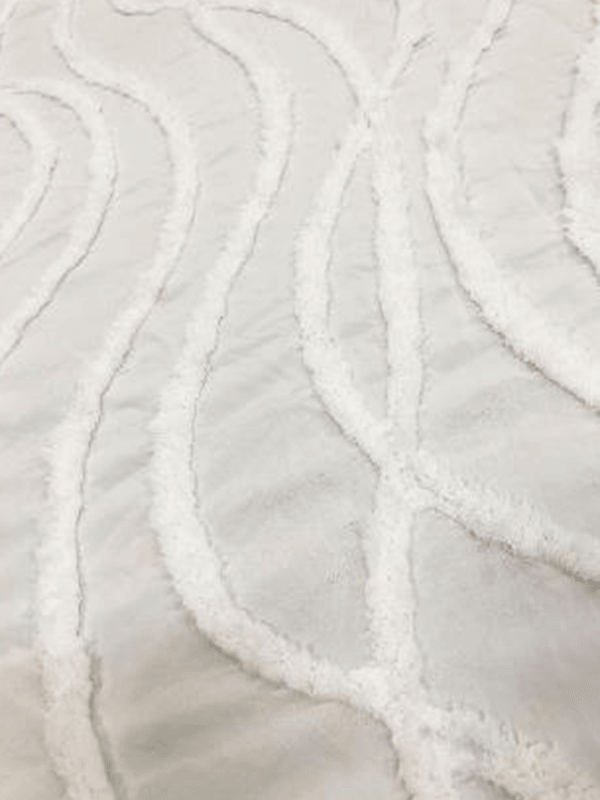
Cotton Fabric Suppliers: A Practical Sourcing Guide for Home Textile Buyers
Oct 19,2026
Curtain Fabric Guide: Choosing the Right Material, Weave, and Drape for Windows
Oct 13,2026
Cotton Fabric Guide: Types, Weaves, and How to Source It Right for B2B
Oct 08,2026
Black and White Diamond Patterned Bedding Fabric | Custom Waffle Weave
Sep 29,2026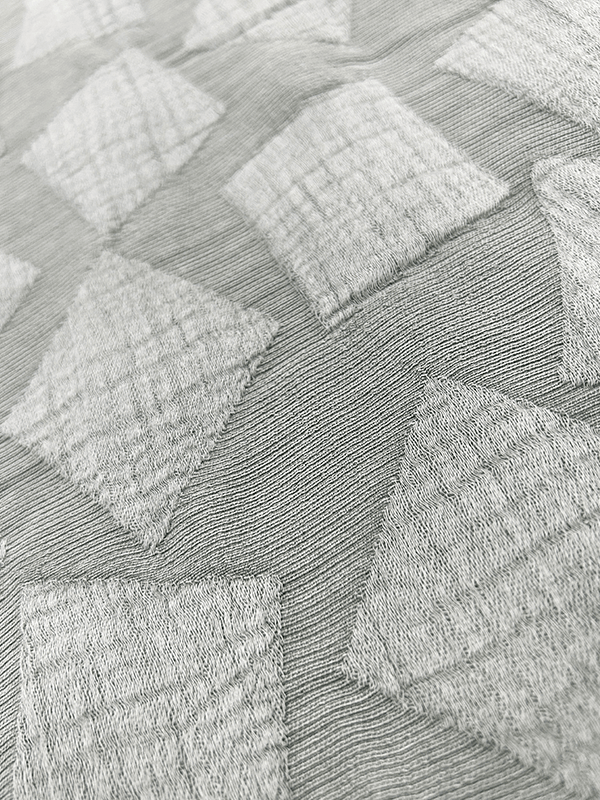
Cotton and Polyester Fabric: A Complete Guide to Blends, Benefits, and Care
Sep 21,2026Content
Every sourcing manager eventually learns the same lesson: the difficult part is not finding cotton fabric suppliers — it is finding one whose cotton behaves the same way on the third shipment as it did on the first sample. Hand feel, shrinkage, shade consistency, and delivery rhythm all have to line up before a fabric is genuinely usable in production.
This guide walks through what experienced buyers look at when they compare suppliers, how to read a cotton specification without guesswork, and where custom development fits into the conversation.
Cotton has held its position in bedding, blankets, and soft furnishing for reasons that have little to do with fashion cycles. It breathes. It accepts dye and print cleanly. It softens with washing rather than stiffening, and it feels familiar against the skin in a way most synthetic fibres can only imitate.
For brands selling into the US, Europe, Australia, and India, that familiarity carries commercial weight. Shoppers recognise "100% cotton" on a label and understand it without explanation, so the fibre does part of the marketing work before the product is even touched.
The catch is that cotton is a natural fibre with natural variation. Two mills can both claim 100% cotton and deliver fabrics that feel like different products. That gap is exactly where supplier selection matters.
The first question worth asking is simple: does this supplier own the looms? A mill controls its own weaving schedule, can adjust a construction mid-development, and will tell you honestly whether a design is practical at your target weight. A trading company has to relay those questions to somebody else and wait for an answer.
We have been weaving in Zhejiang since 2006, with more than 200 machines running across bedding, curtain, sofa, home textile, and jacquard lines. That setup is not unusual in itself — what matters is what it allows: samples that reflect real production conditions, and pricing that comes from the loom rather than from a middle layer.
The second question is about design capability. A supplier who only reproduces existing articles will leave you hunting for newness elsewhere every season. An in-house design team releasing fresh patterns each month keeps a range moving without a separate development budget, and it also means someone on the other side of the email understands why a certain weave will not hold a certain motif.
Specification sheets are useful, but only if you know which numbers actually change the finished product. Fibre content is the headline; weave, yarn count, weight, and finishing decide what the fabric really does in the hands of a customer.
| Construction | Hand feel | Breathability | Durability | Typical use |
|---|---|---|---|---|
| 100% cotton | Soft, dry, improves with washing | High | Good, moderate shrinkage | Bedding, blankets, jacquard |
| Poly-cotton blend | Smooth, holds shape | Moderate | Very good, low shrinkage | Bedding, blankets, high-use items |
| 100% polyester | Crisp or brushed depending on finish | Lower | Excellent, resists creasing | Curtains, value bedding, textures |
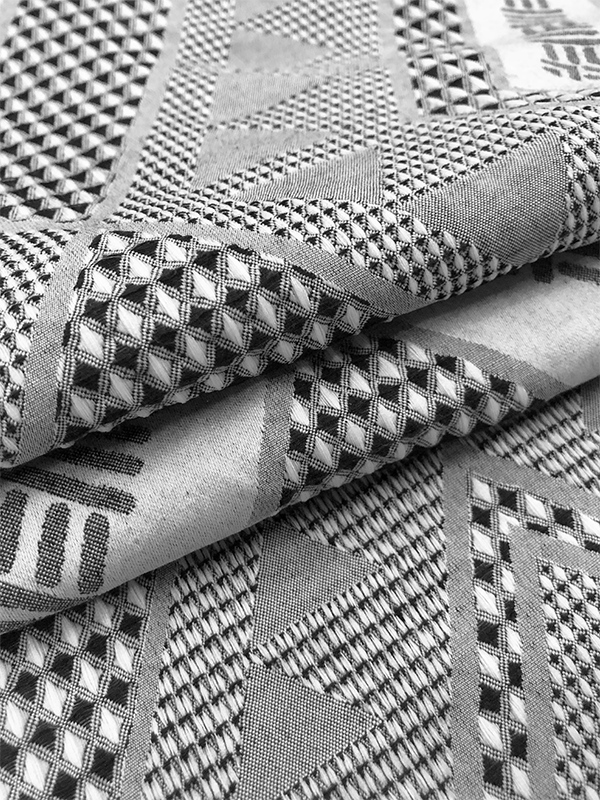
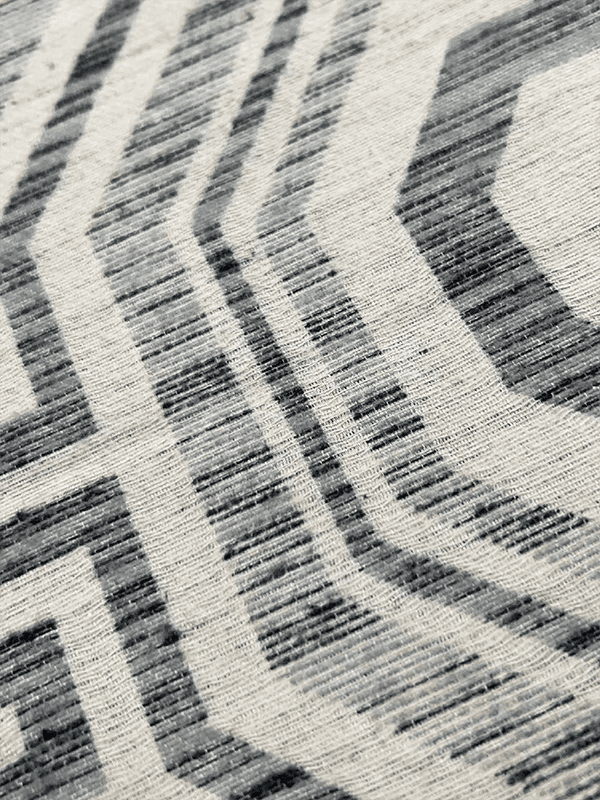
A plain weave cotton reads crisp and even. A twill or jacquard construction gives depth and a softer drape, which is why so much of our bedding work leans on interwoven geometric patterns, waffle grids, and irregular cuts. The pattern is not decoration applied afterwards — it is built into the weave, and it changes how the fabric falls over a duvet.
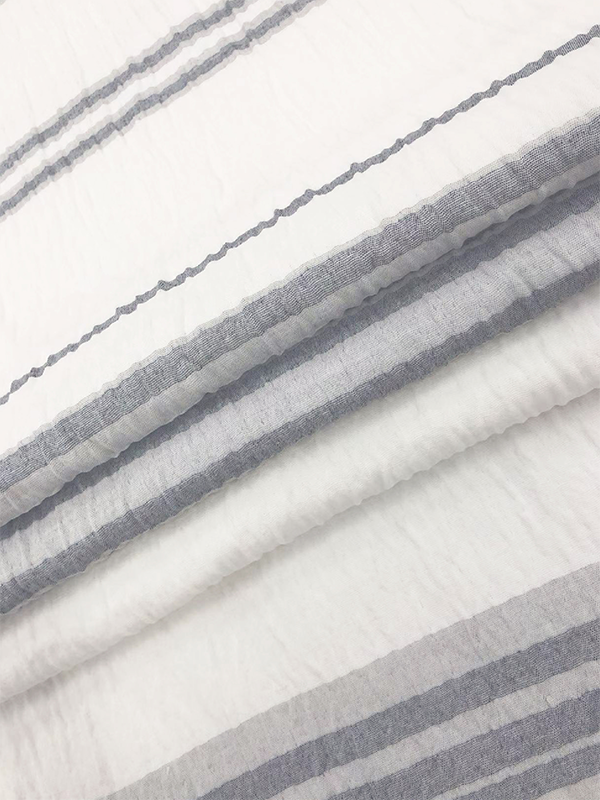
Washing, sanding, and softening alter cotton more than most buyers expect. A sand-washed or crepe finish turns a flat cloth into something with movement and a slightly vintage surface. Ask specifically which finishing is applied, because "soft" is a preference, not a specification.
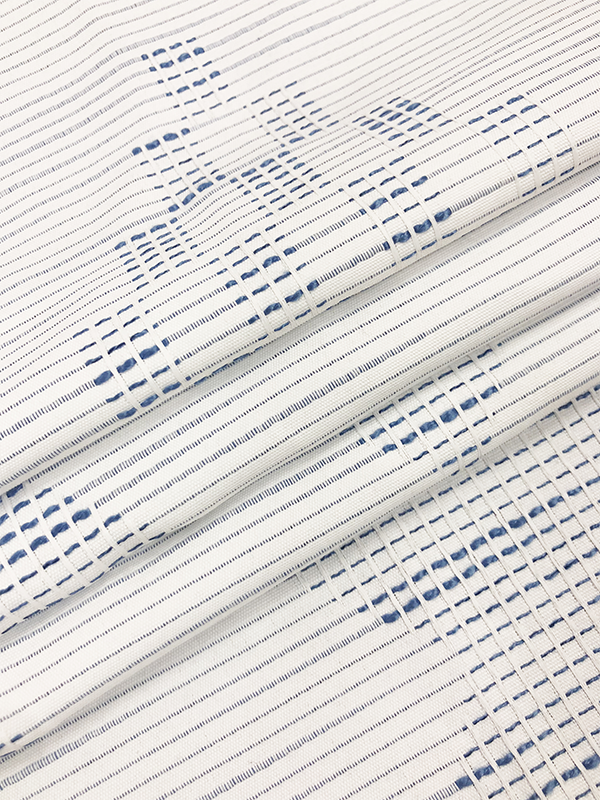
Our cotton programme is organised by end use, so buyers can start from the application rather than from a yarn count. The 100% cotton bedding fabric range covers interwoven geometric cuts, waffle structures, and irregular stripe effects woven for sheeting, duvet covers, and pillowcases.
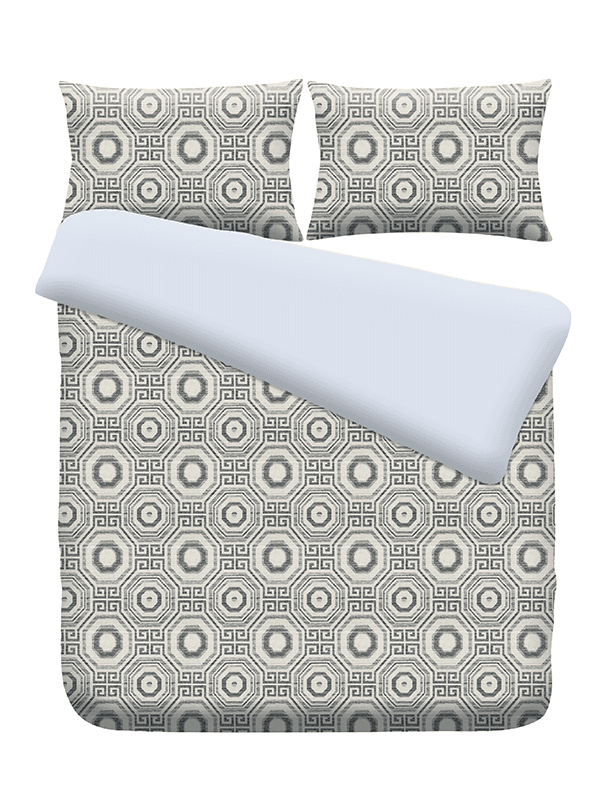 Square and Circular Four-Grid Interwoven Cotton Bedding FabricA 100% cotton bedding fabric at 160gsm and 280cm width, with a four-grid interwoven square and circular pattern for bedding sets.View Product →
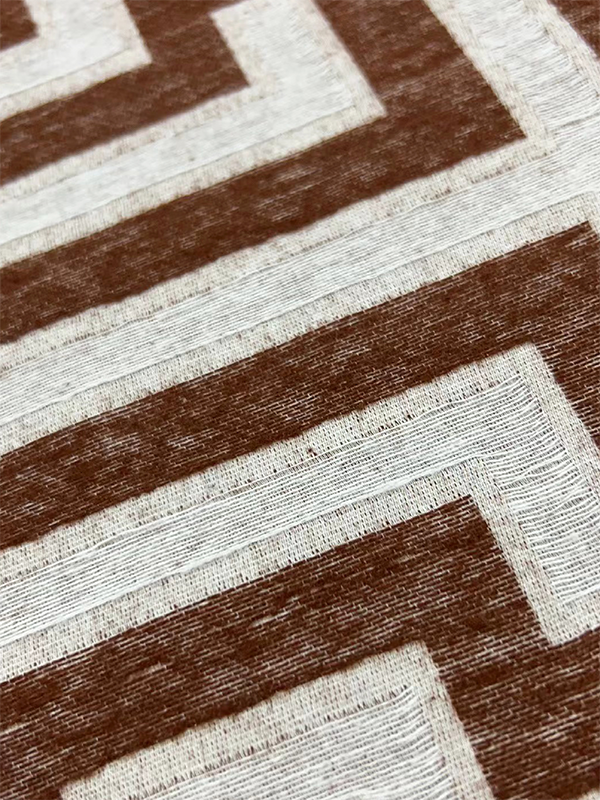
On the jacquard side, our all-cotton articles use an air-layer structure to build loft and a quiet lustre — a construction that suits bed throws, cushions, and decorative panels where the pattern should be felt as much as seen.
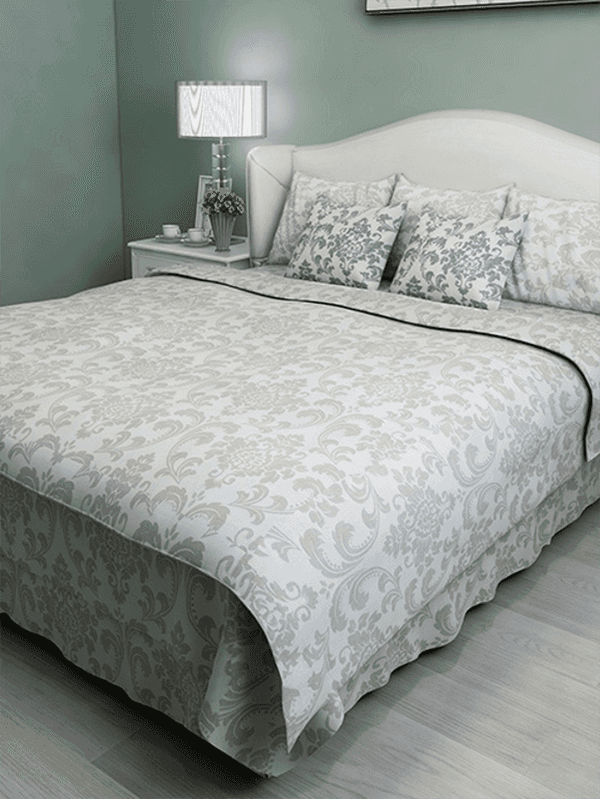 All-Cotton European Jacquard Air-Layer Bedding FabricA 100% cotton jacquard at 360gsm and 270cm width, offering a soft hand, gloss and layered European patterns for bedding.View Product →
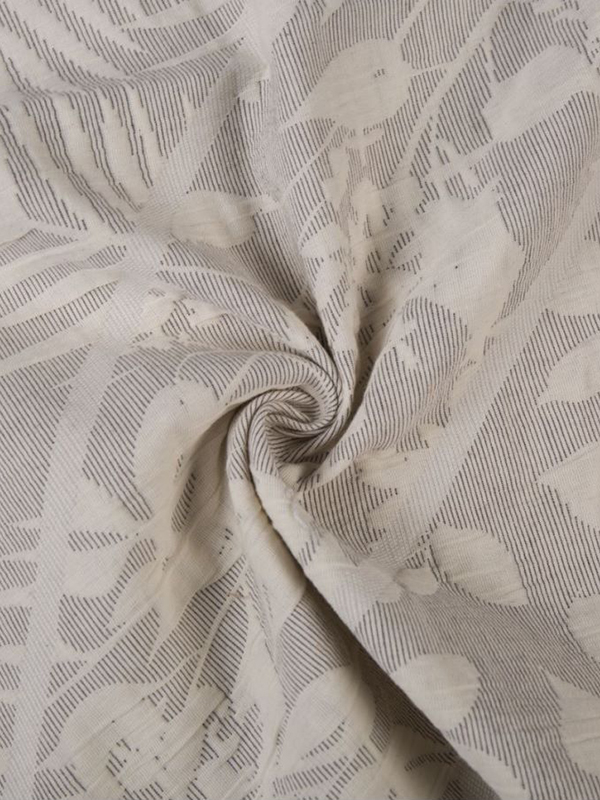
For buyers balancing cost against comfort, blends remain the practical middle ground. A five-petal floral poly-cotton delivers a cleaner print surface and steadier shrinkage than pure cotton, which matters in high-turnover programmes.
 Five-Petal Floral Poly-Cotton Bedding FabricA 40% polyester, 60% cotton bedding fabric at 370gsm and 270cm width, with a gray-white floral design for dimensional stability.View Product →
Beyond bedding, cotton appears across our home textile blanket series and independent jacquard category, while the curtain and sofa lines focus on polyester and linen blends where dimensional stability matters more than softness.
Most of our OEM and ODM work starts with a drawing, a reference swatch, or a photograph of a finished product. From there, the design team builds a construction that can reproduce the look at a workable weight, checks the hand against the original, and adjusts the weave before a single bulk metre is woven. Working this way takes longer at the start and saves far more time later.
If you are still deciding between fibre options, our notes on how 100% cotton compares with other fibres in durability and performance are a useful starting point for internal discussions before sampling begins.
A short list, drawn from conversations we have had with buyers over many seasons:
None of these require technical expertise to ask. The answers, though, separate a supplier who knows their own looms from one who is guessing.
Cotton ages well when it is treated sensibly: cooler washes, gentle detergents, and no prolonged tumble drying. Blends tolerate more heat and hold their shape longer, which is why they suit rental programmes and high-traffic hospitality accounts. Sharing that guidance with your customer is part of the product, and a supplier who will help you write it is worth keeping.
We take the position that problems are ordinary and solving them is the job. Whether the question is about a colour match or a minor weaving variation, it gets answered.
Good sourcing rarely comes from the lowest quote. It comes from a supplier who can explain why a construction works, sample it honestly, and repeat it at scale. If you are developing bedding, jacquard, curtains, or blanket fabrics for the US, European, Australian, or Indian markets, send us a drawing or a swatch and we will tell you what is achievable — and what is not. That first honest answer usually saves everyone a season.
Your email address will not be published. Required fields are marked *
 Phone: +86-13362131543
 E-mail: [email protected]
 Address: No 3 Zhongyuan RD.,Shenshi Lianmeng Industrial Zone,Xucun Town,Haining,Zhejiang,China
Copyright © Zhejiang OSD Textile Co., Ltd. All Rights Reserved.
