 English
 中文简体
中文简体 Español
 عربى
عربىNews
Home / News / Industry News / Cotton and Polyester Fabric: A Complete Guide to Blends, Benefits, and Care

Cotton and Polyester Fabric: A Complete Guide to Blends, Benefits, and Care
Sep 21,2026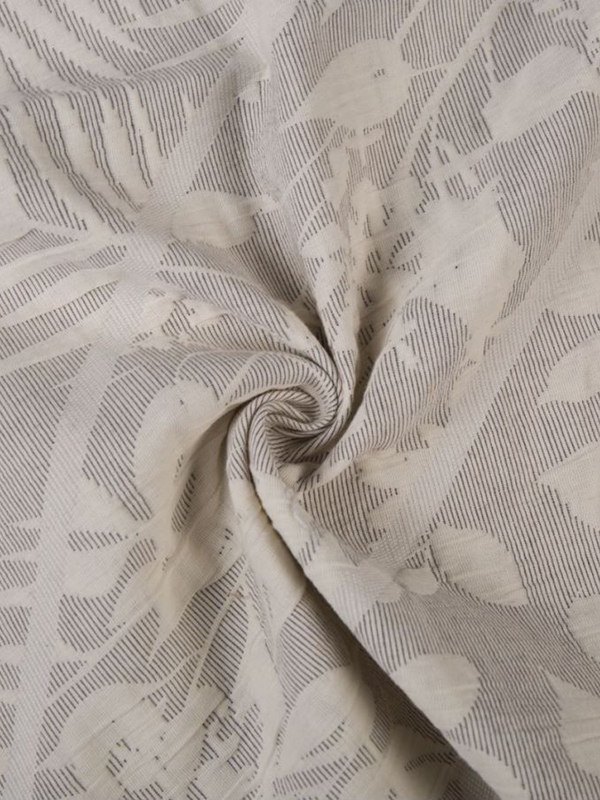
Bedding Fabric Explained: Cotton, Polyester & Blends for Buyers and Manufacturers
Sep 15,2026
Bedding Fabric Guide: Cotton, Polyester, and Blended Options for Buyers
Sep 08,2026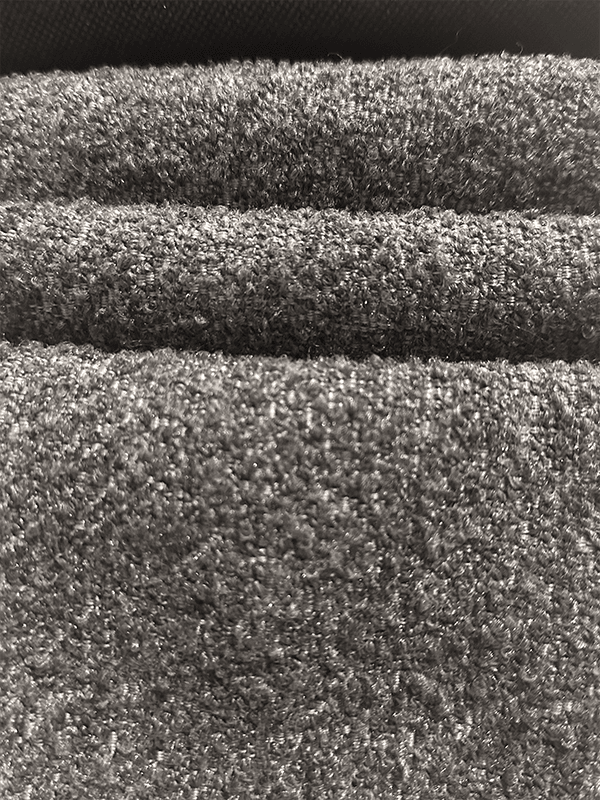
How Do You Choose the Right Sofa Upholstery Fabric?
Sep 01,2026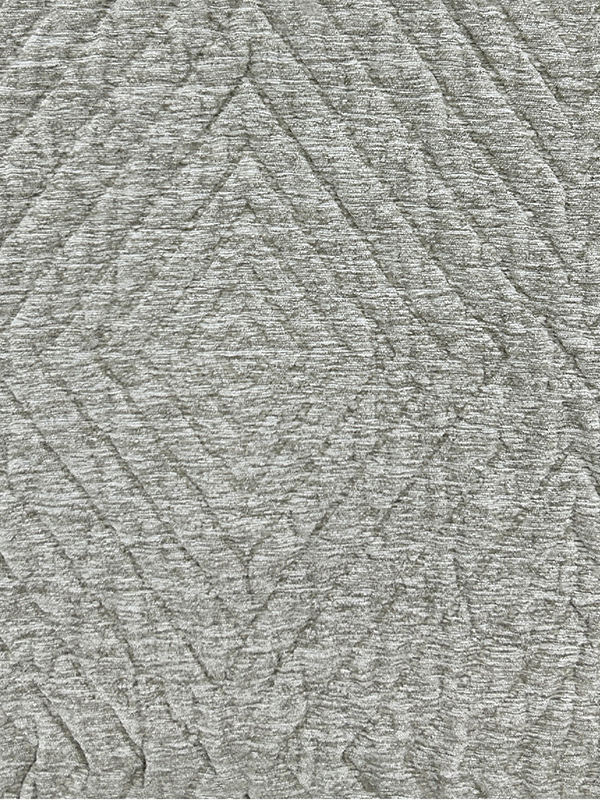
How Do You Choose the Right Sofa Upholstery Fabric for Your Home?
Aug 25,2026Content
When you are choosing materials for bedding, curtains, sofas, or home textile collections, the phrase "cotton and polyester fabric" often comes up. It can mean 100% cotton, 100% polyester, or a blend of the two, and each option behaves very differently in real use. As a fabric factory manufacturer serving global buyers since 2006, we have produced cotton, polyester, and polyester-cotton fabrics for markets across the United States, Europe, Australia, India, and beyond. This guide shares what we have learned about these fibers, how they compare, and how to choose the right one for your products.
Cotton and polyester fabric is an umbrella term used across the textile industry to describe fabrics made from cotton fiber, polyester fiber, or a combination of both. On a fiber content label, you will typically see "100% cotton," "100% polyester," or a blend ratio such as "65% cotton / 35% polyester." Blend ratios are always listed with the larger percentage first, and they directly influence the fabric's hand feel, durability, care requirements, and price.
Cotton has been woven into fabric for thousands of years, and it remains one of the most popular fibers in home textiles. The reason is simple: cotton is soft, breathable, and highly absorbent. It feels gentle against the skin, which makes it ideal for bedding that is used every night. Cotton also accepts dyes and prints exceptionally well, so patterns stay vivid and detailed.
That said, 100% cotton is not without limitations. It wrinkles easily, can shrink if not properly pre-shrunk, and may fade over time with repeated washing. For buyers who need a crisp, low-maintenance fabric, pure cotton can demand more care than their customers are willing to give.
Polyester is a synthetic fiber derived from petroleum-based polymers. It entered the textile market in the mid-20th century and quickly gained a reputation for strength, elasticity, and resistance to wrinkles and shrinking. Polyester fabrics dry quickly, hold their shape, and retain color much longer than most natural fibers, which is why polyester is so widely used in curtains, upholstery, and outdoor textiles.
The main drawbacks are equally well known. Polyester is less breathable than cotton, and in hot or humid conditions it can feel less comfortable against the skin. Lower-quality polyester fabrics may also pill after repeated washing. In our experience, however, modern yarn technologies and finishing processes have dramatically improved the hand feel and performance of polyester textiles in recent years.
This is where cotton and polyester fabric becomes genuinely interesting. A blend is not a compromise; it is a deliberate engineering decision. Cotton brings softness, breathability, and moisture absorption. Polyester contributes strength, dimensional stability, wrinkle resistance, and colorfastness. Put them together, and you get fabrics that are more durable than pure cotton and more comfortable than pure polyester.
Different products call for different blend ratios. The table below summarizes the most common ratios we produce and the applications where each performs best.
| Blend Ratio | Feel and Performance | Best Applications |
|---|---|---|
| 80% cotton / 20% polyester | Mostly natural hand feel, slightly stronger, fewer wrinkles | Bedding, shirts, blouses |
| 65% cotton / 35% polyester | Balanced softness and durability, easy care | Bedding sets, workwear, uniforms |
| 50% cotton / 50% polyester | Even blend, smooth and stable, colorfast | Home textiles, blankets, casual apparel |
| 35% cotton / 65% polyester | Polyester-dominant, very strong, quick-drying | Curtains, upholstery, outdoor textiles |
For bedding, a cotton-rich blend keeps the sleep surface soft and breathable. For curtains, a polyester-dominant blend offers better drape stability and lightfastness. The right ratio ultimately depends on the end use, the target price point, and the feel your customers expect. If you want to go deeper into how fiber composition affects feel, breathability, and durability, our article on how fabric composition affects bedding performance explains the technical details in plain language.
Home textiles are used daily and washed frequently, so fiber choice has a direct impact on customer satisfaction. Here is how cotton and polyester fabric are applied across the main product categories we manufacture.
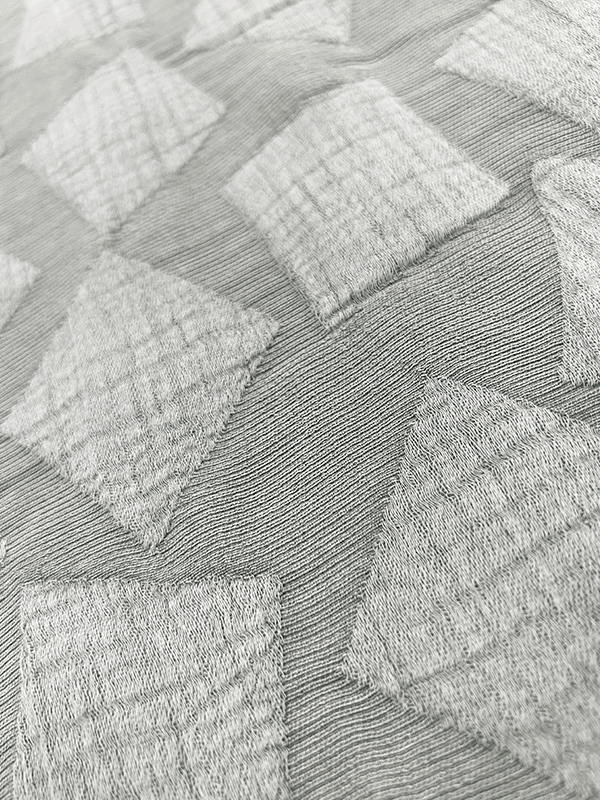
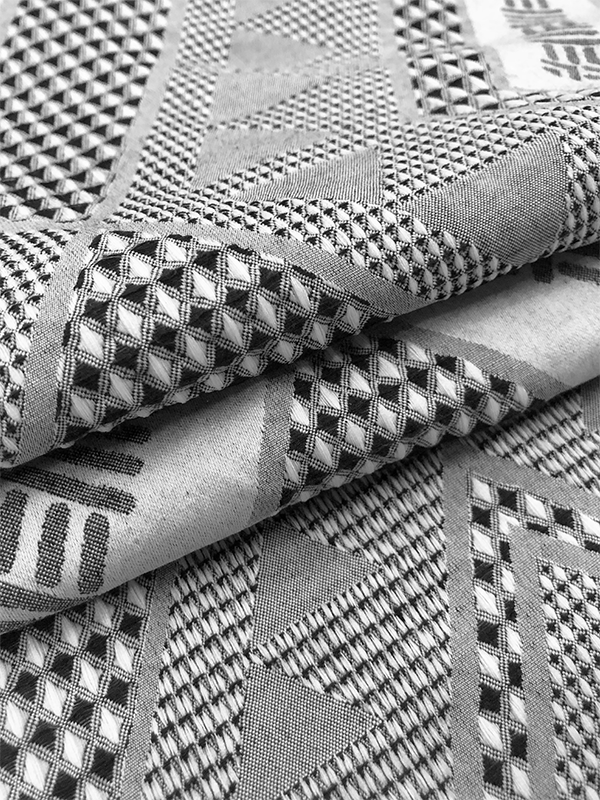
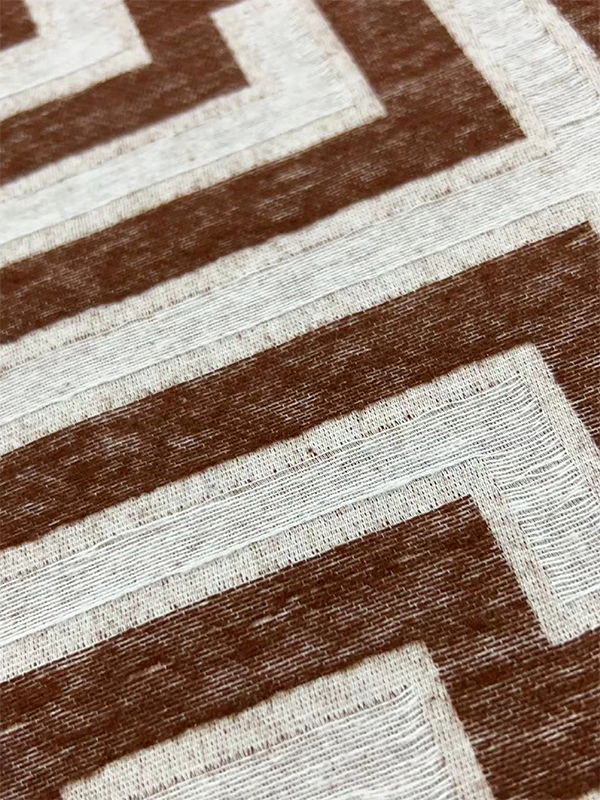
Bedding is the most demanding application when it comes to comfort. A sheet is against the skin for hours every night, so breathability and softness are essential. Cotton-rich polyester-cotton blends give you the gentle touch of cotton with better wrinkle resistance and durability. They are also easier to care for than pure cotton, which matters greatly for hospitality buyers and busy households. One example from our current range is the copper coin shaped polyester cotton bedding fabric, whose textured weave adds visual interest while keeping the sleeping surface smooth.
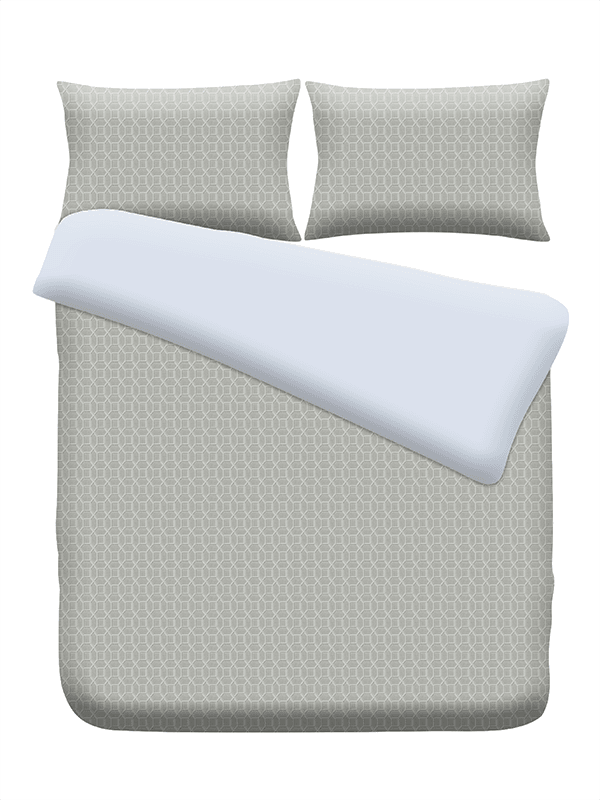 Copper Coin Shaped Polyester Cotton Bedding FabricThis 60% cotton, 40% polyester bedding fabric features a distinctive copper coin pattern formed by hexagonal and square connections, offering a modern, three-dimensional look with stable size and wrinkle resistance.View Product →
For curtains, the priorities change. Buyers look for good drape, strong color retention, and resistance to sunlight. Polyester-dominant blends and polyester-linen blends are widely used because they hold their shape well and resist fading. Pure cotton curtains can look beautiful, but they tend to sag and fade more quickly when exposed to direct sunlight.
Sofa fabrics have to withstand constant friction, spills, and cleaning. Chenille and textured weaves made from polyester or polyester-cotton blends offer a soft hand feel while providing the abrasion resistance upholstery demands. The irregular surface textures also help to hide everyday wear.
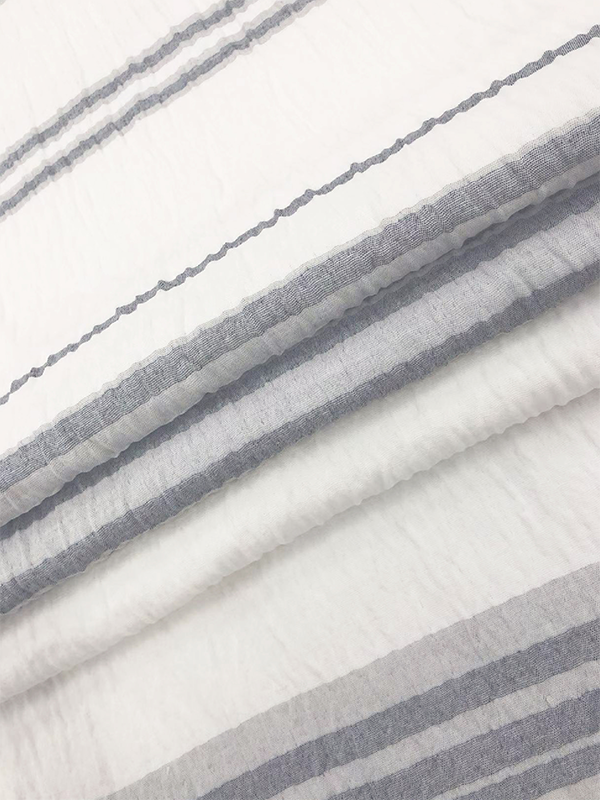
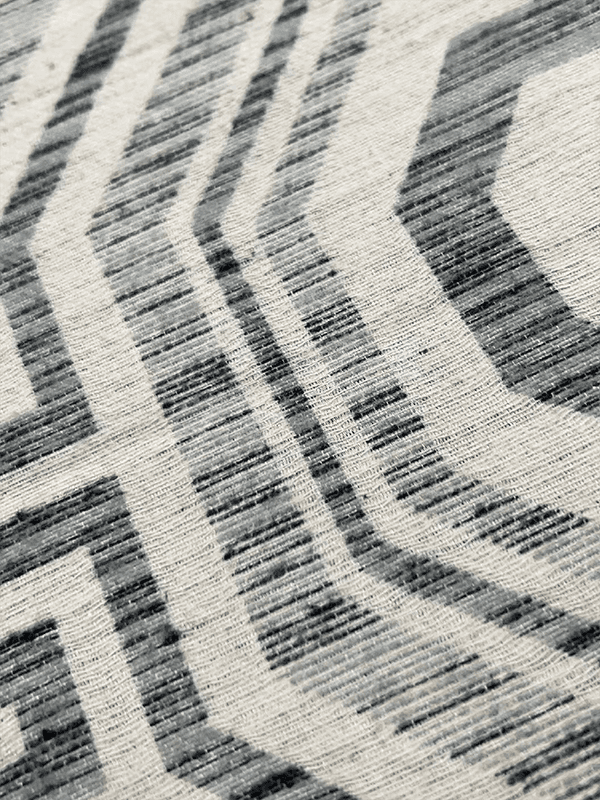
For blankets and throws, polyester-cotton yarns are frequently used in chenille constructions to create a plush, warm fabric that is still easy to wash and quick to dry. Air-layer and waffle structures have become especially popular in modern home textile collections. Our gray-white modern minimalist chenille blanket series shows how a polyester-cotton blend can achieve a clean, contemporary look without compromising warmth.
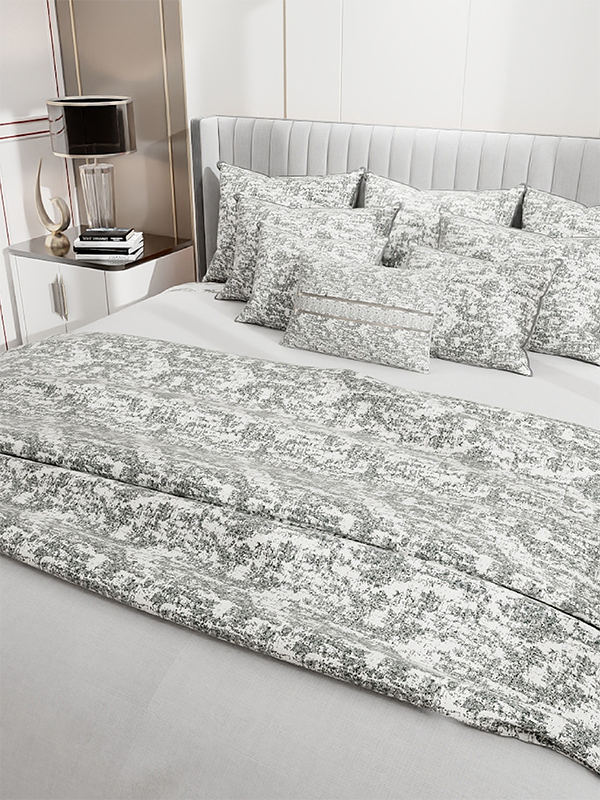 Gray White Modern Minimalist Wind and Snow Neil Home Textile Fabric Blanket SeriesThis blanket series blends 92% polyester with 8% cotton in a chenille construction, providing a cozy, washable throw with a minimalist gray and white palette that suits modern sofas and beds.View Product →
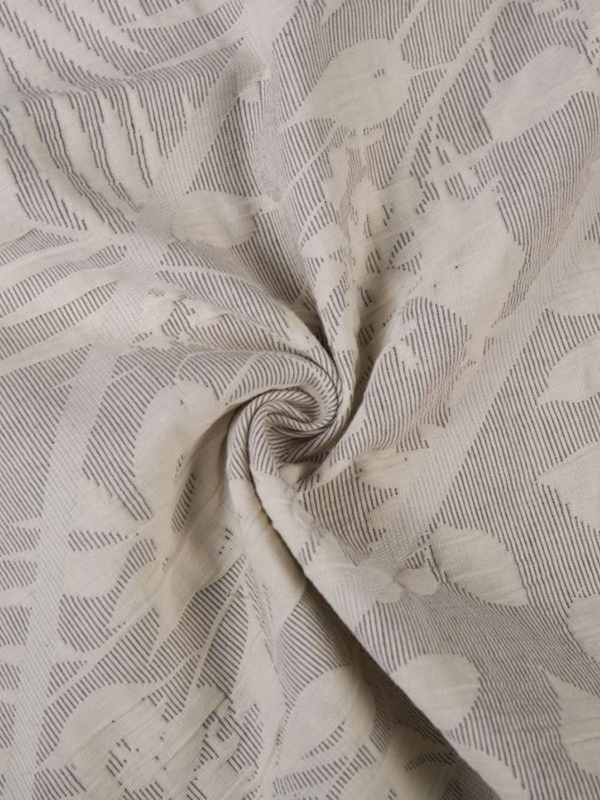
Jacquard weaving weaves patterns directly into the fabric, so the design becomes part of the cloth itself. Polyester-cotton jacquard fabrics are prized for their sharp pattern definition and lasting appearance, and they are used in bedding, curtains, cushions, and decorative textiles. Our cherry blossom tree polyester cotton jacquard fabric combines a delicate botanical motif with the durability of a blended yarn, making it a strong choice for buyers who want both style and performance.
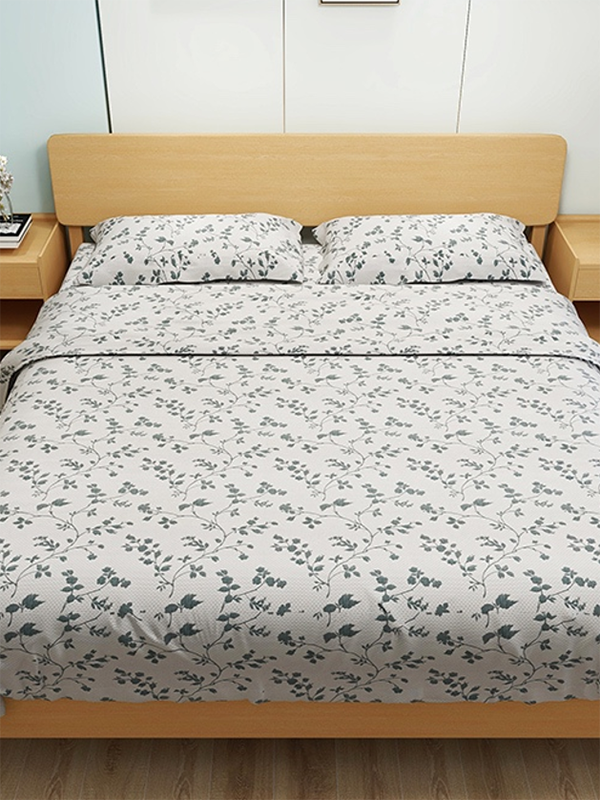 Cherry Blossom Tree Polyester Cotton Jacquard FabricThis 60% cotton, 40% polyester jacquard fabric features a cherry blossom tree pattern with clear, layered design, offering durability, easy care, and a pastoral aesthetic suitable for bedding and decorative textiles.View Product →
Whether you are a brand owner, a purchasing manager, or a product developer, the selection process starts with the end use. Ask yourself these practical questions:
Once these questions are answered, our design and development team can recommend the right blend ratio, weave structure, and finishing process. As a factory manufacturer with more than 200 weaving machines, we work directly with buyers on OEM and ODM projects, developing custom fabrics from your drawings or samples. We also launch new designs every month, which helps you refresh your collections seasonally.
Even the best cotton and polyester fabric will perform poorly if it is cared for incorrectly. Blends are generally low-maintenance: machine wash in cold or warm water, use low or medium heat when drying, and iron at a medium temperature if needed. Because the polyester component reduces shrinkage and wrinkling, blended fabrics usually need noticeably less ironing than pure cotton. For printed or jacquard fabrics, turning the item inside out before washing helps preserve the pattern.
Cotton and polyester fabric, whether woven as a single fiber or blended together, remains the foundation of the global home textile industry. The key is to understand what each fiber does well and then match it to the application. With in-house production, a monthly design calendar, and direct factory pricing, we help buyers around the world find the right cotton and polyester fabric for their markets. If you are planning a new collection or searching for a dependable fabric partner, we would be glad to discuss your requirements. In the meantime, you are welcome to explore our fabric catalog.
Your email address will not be published. Required fields are marked *
 Phone: +86-13362131543
 E-mail: [email protected]
E-mail: [email protected]
 Address: No 3 Zhongyuan RD.,Shenshi Lianmeng Industrial Zone,Xucun Town,Haining,Zhejiang,China
Copyright © Zhejiang OSD Textile Co., Ltd. All Rights Reserved.
