 English
 中文简体
 Español
 عربى
News
Home / News / Industry News / Inside a Cotton Fabric Factory: How Cotton Becomes Fabric and How Buyers Source It


Inside a Cotton Fabric Factory: How Cotton Becomes Fabric and How Buyers Source It
Oct 26,2026
Cotton Fabric Suppliers: A Practical Sourcing Guide for Home Textile Buyers
Oct 19,2026
Curtain Fabric Guide: Choosing the Right Material, Weave, and Drape for Windows
Oct 13,2026
Cotton Fabric Guide: Types, Weaves, and How to Source It Right for B2B
Oct 08,2026
Black and White Diamond Patterned Bedding Fabric | Custom Waffle Weave
Sep 29,2026Content
A cotton fabric factory is where a field of white bolls becomes the bolts of cloth that end up on beds, windows and sofas. Many buyers picture one enormous machine doing all of that work, but a working mill is really a chain of specialised steps, and every link in that chain changes how the finished fabric feels, wears and sells. We have been running that chain since 2006, and the questions our customers ask are remarkably consistent: what actually happens between the bale and the bolt, and how do you tell a serious factory from one that simply quotes the lowest price?
A factory is more than a weaving shed with looms in a row. When cotton arrives it is a compressed bale of fibre, not a textile, and turning it into usable cloth calls for several kinds of machinery and, just as importantly, several kinds of expertise.
A mill that only handles the last few steps is really a converter. A mill that controls spinning, weaving and finishing under one roof can trace a fault back to its cause instead of guessing, and that difference becomes obvious the moment something goes wrong on a repeat order.
Ginning separates fibre from seed. From there the fibre is opened, cleaned and blended, carded into a sliver, drawn, roved and finally spun into yarn. Yarn count and twist decide a great deal: a finer count gives a smoother surface, while extra twist adds strength and a crisper hand.
Before weaving, warp yarns are wound, sized and drawn through the loom so they can survive the friction of heddles and reed. Weft yarn is prepared separately. The way the two interlace determines whether the cloth comes out plain, twill, satin or waffle, or as a jacquard pattern built thread by thread.
Grey cloth is not a finished product. Desizing removes the sizing, scouring and bleaching clean the fibre, mercerising adds lustre and strength to cotton, and dyeing or printing brings the colour. Finishing then adjusts hand, shrinkage and surface: sanforising controls residual shrinkage, raising lifts a pile, and calendering smooths the face.
| Stage | What happens | What it means for your order |
|---|---|---|
| Ginning and blending | Fibre is separated from seed, opened and mixed | Consistency between production runs |
| Spinning | Fibre becomes yarn of a defined count and twist | Surface smoothness and strength |
| Warping and sizing | Warp yarns are prepared and protected | Fewer breaks, cleaner weaving |
| Weaving or knitting | Yarns interlace into cloth | Structure, drape and pattern |
| Dyeing and printing | Colour is applied to yarn or cloth | Shade accuracy and colour fastness |
| Finishing | Hand, shrinkage and surface are adjusted | How the fabric behaves after washing |
| Inspection and packing | Cloth is checked, measured and rolled | Fewer surprises on arrival |
Cotton is breathable, comfortable and takes dye beautifully, though it creases and shrinks more than synthetics. Polyester is strong and wrinkle-resistant. Blends sit between the two. In practice the choice depends on the finished product rather than on which fibre is best in the abstract.
Because the same composition can behave very differently depending on weave and finishing, it is worth reading about the performance characteristics that matter in home textiles before you lock a specification.
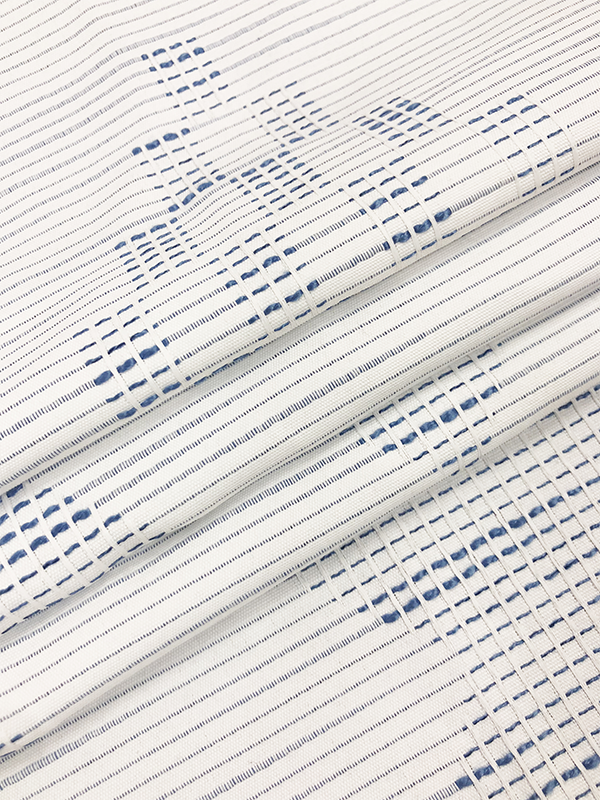
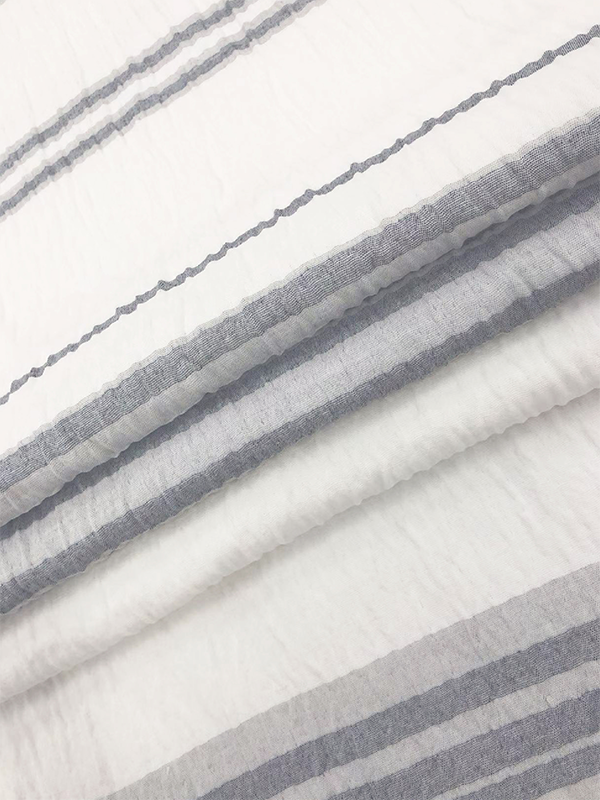
Bedding fabric is usually the first thing a buyer asks us about, because it sits closest to the skin and carries the most visible part of a brand story. Waffle, crepe, cut-geometry and interwoven designs all work here, and the pattern is often what tells one cotton bedding fabric apart from another on a shelf.
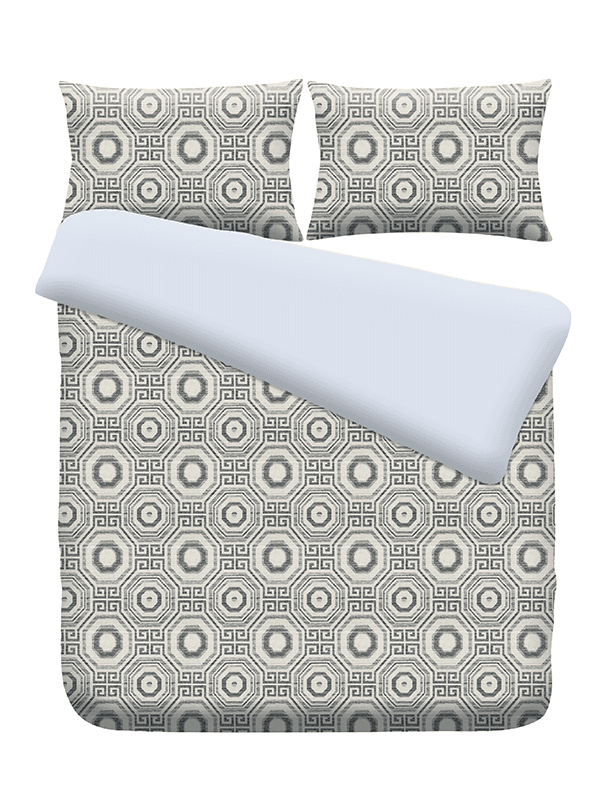 Square and Circular Four-Grid Interwoven Cotton Bedding Fabric100% cotton bedding fabric with a square and circular four-grid interwoven pattern, suited to skin-close bedding ranges where pattern differentiation matters.View Product →
Curtain fabric leans towards high-precision weaving and denser constructions, with botanical and European styling that reads well in a full drop. Sofa fabric, by contrast, is usually produced in smaller ranges and often relies on speciality yarns and irregular textures that give upholstery its character.
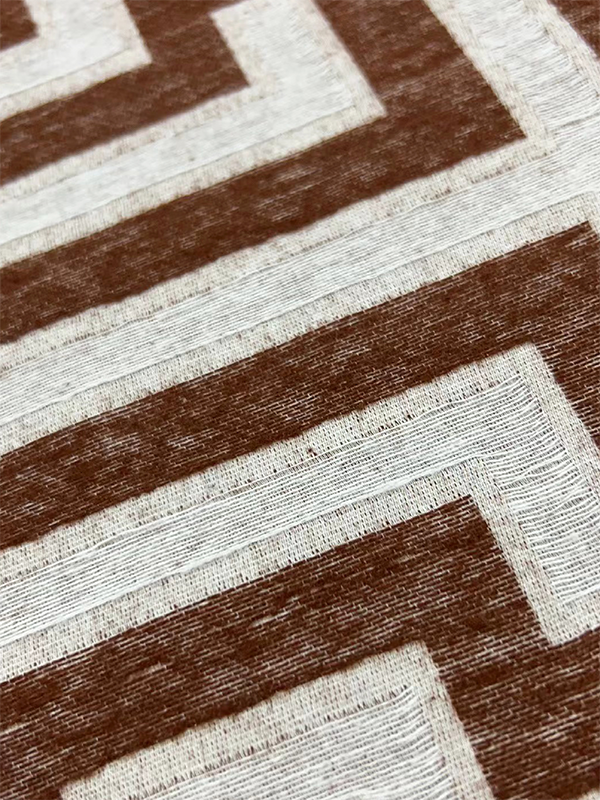
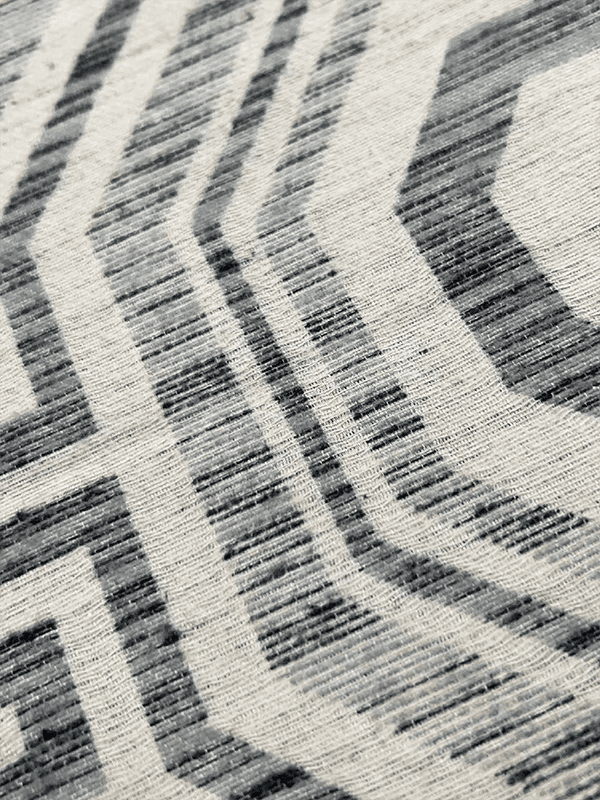
Jacquard is a construction rather than an end use, which is why it appears across bedding, curtains and upholstery. Air-layer jacquard, floral and leaf-gradient designs are typical of this group. Blanket programmes, meanwhile, lean on chenille yarns and soft waffle structures that need warmth and a gentle hand.
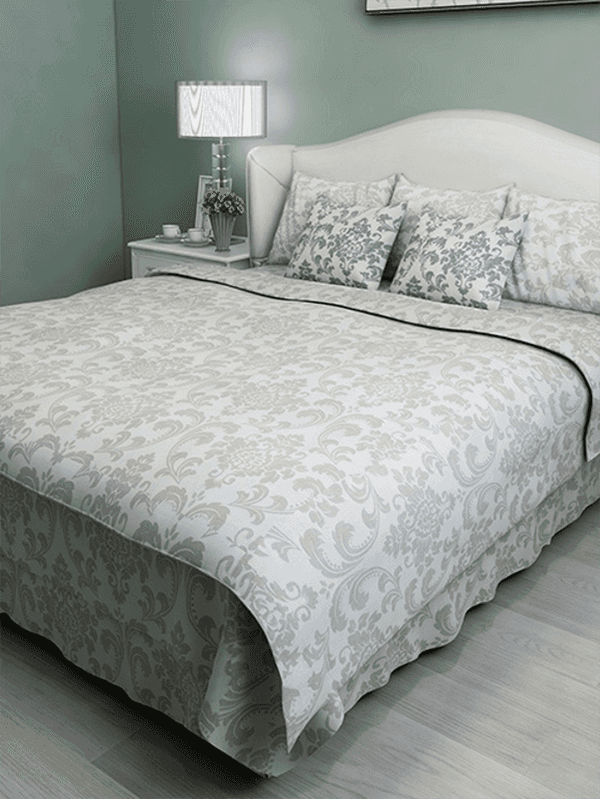 European Jacquard Air Layer All-Cotton Fabric100% cotton jacquard at 360gsm and 270cm wide, presented within air-layer jacquard bedding options and custom pattern development.View Product →
 Waffle Chenille Blanket Fabric in Blue White Rice420gsm polyester chenille blanket fabric with classic waffle weave and blue-white-rice palette, suited to warm throw and bedding uses.View Product →
Most orders start with a drawing, a swatch or a competitor's sample rather than a catalogue number. Our own design department releases new patterns every month, and the factory floor runs more than 200 machines, so a new construction can be developed, woven and finished without waiting on a third party. When a customer sends artwork or a physical sample, the work begins with matching weight, density and finish, then producing counter samples for approval before bulk production is committed.
At Zhejiang OSD Textile Co., Ltd. we have found that the most useful service we offer is not a price list but an honest conversation about what a given construction can and cannot do. If a design needs a heavier yarn or a different finishing route to survive real use, it is better to say so before the fabric is woven.
Yes. Send the artwork or a physical swatch, and a mill with its own design and weaving capacity can match the construction, weight and finish, then supply counter samples for approval.
Not usually. A price gap normally hides a difference in yarn count, density, dye class or inspection standard. Ask each supplier to quote against the same written specification, then compare the numbers.
No. Weave, yarn quality and finishing matter at least as much, which is why two 100% cotton fabrics at the same weight can behave completely differently in use.
Every order is really a small project, and the earlier the technical conversation starts, the fewer surprises appear later. If you are planning a bedding, curtain, sofa or blanket programme, send us your specification or your artwork and we will tell you plainly what is realistic in terms of construction, finishing and timing. Getting that part right at the start is what keeps a cotton fabric factory and its customers working together for years.
Your email address will not be published. Required fields are marked *
 Phone: +86-13362131543
 E-mail: [email protected]
 Address: No 3 Zhongyuan RD.,Shenshi Lianmeng Industrial Zone,Xucun Town,Haining,Zhejiang,China
Copyright © Zhejiang OSD Textile Co., Ltd. All Rights Reserved.
