 English
 中文简体
中文简体 Español
 عربى
عربىNews
Home / News / Industry News / Bedding Fabric Explained: Cotton, Polyester & Blends for Buyers and Manufacturers

Bedding Fabric Explained: Cotton, Polyester & Blends for Buyers and Manufacturers
Sep 15,2026
Bedding Fabric Guide: Cotton, Polyester, and Blended Options for Buyers
Sep 08,2026
How Do You Choose the Right Sofa Upholstery Fabric?
Sep 01,2026
How Do You Choose the Right Sofa Upholstery Fabric for Your Home?
Aug 25,2026
How Do You Choose the Right Curtain Fabric for Every Room?
Aug 19,2026Content
When a bedding importer picks up a swatch labeled "100% cotton" and assumes the label alone guarantees softness and durability, the next sample usually corrects that assumption. Two fabrics with the same fiber content can feel, drape, and wear completely differently. The difference comes down to yarn quality, weave construction, and finishing — the variables a buyer actually pays for. This guide explains how to evaluate bedding fabric on those terms, whether you are developing a new duvet program, specifying fabric for hotel use, or checking a supplier's quotation.
The fiber content sets the upper limit for a bedding fabric's breathability, absorbency, strength, and care behavior. Everything else — yarn count, weave, finish — works within that limit, which is why fiber selection is usually the first decision to make.
Cotton is the reference point for natural comfort. It breathes well, absorbs moisture, feels soft against skin, and becomes more comfortable with repeated washing. But cotton quality varies substantially. Combed, long-staple cotton produces smoother, stronger yarn, while lower-grade cotton pills and loses its handfeel quickly. Cotton also shrinks more than polyester and wrinkles easily unless it receives a pre-shrinkage or easy-care finish.
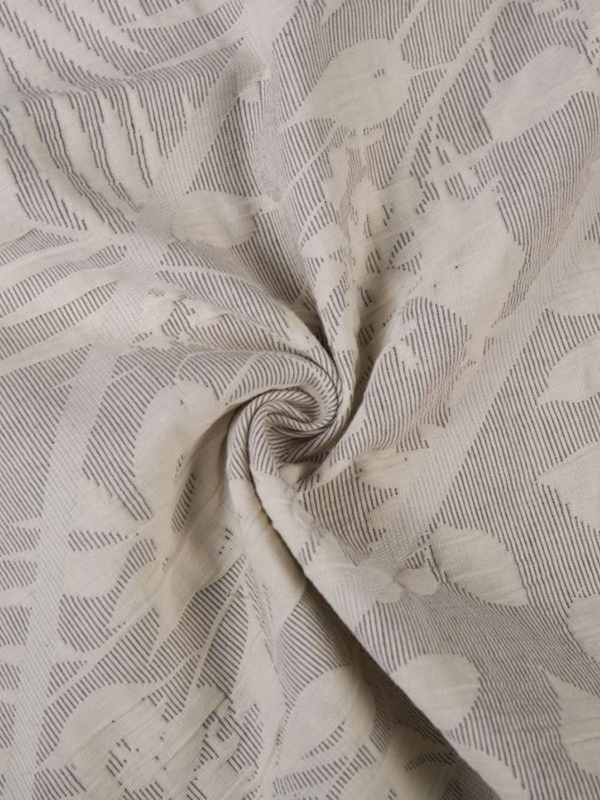
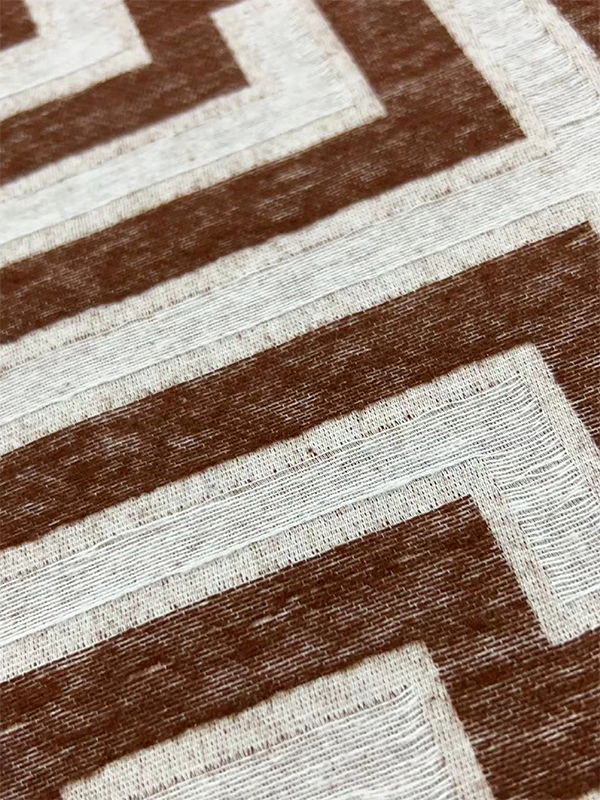
Cotton's natural surface also takes well to textured designs. Geometric constructions such as block-cut or tetris-inspired patterns are popular in cotton bedding because the weave structure adds depth without increasing weight.
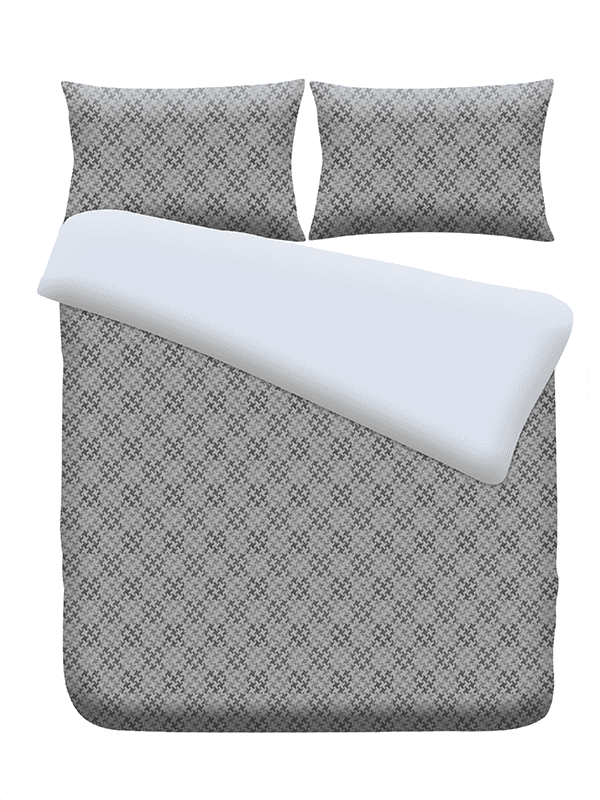 Checkered Irregular Tetris Pattern Cotton Bedding FabricThis cotton fabric features a playful Tetris-inspired plaid with varied square shades, adding depth and movement. Its textured weave offers comfort and style, ideal for distinctive bedding designs.View Product →
Polyester brings strength, dimensional stability, and colorfastness at a lower cost. It resists shrinking, dries quickly, and holds crisp colors through many wash cycles. Its historical weakness was breathability and a less comfortable handfeel. That trade-off has narrowed considerably in recent years, as textured yarns and constructions such as waffle, crepe, and brushed surfaces have made polyester bedding fabric noticeably softer and more breathable.
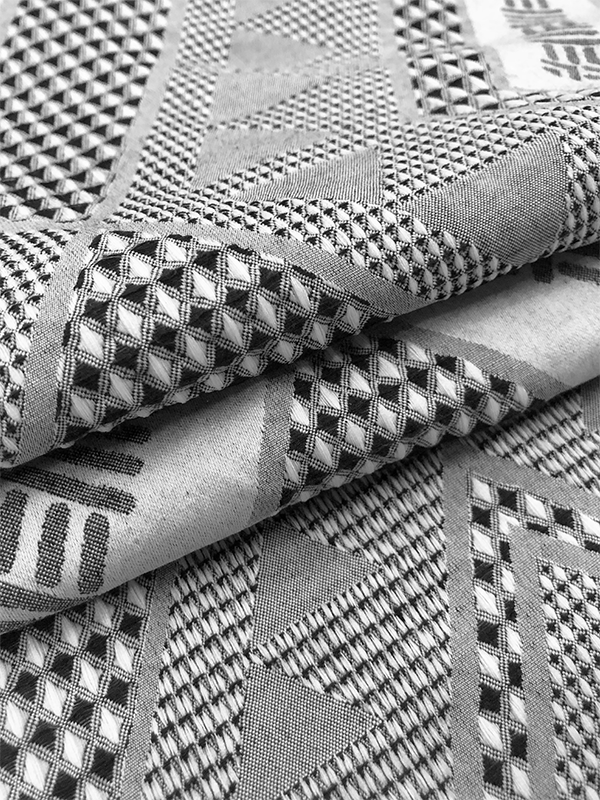
A waffle weave is a common example: the raised grid traps air, creating a lighter, more breathable feel while remaining easy to care for. For hotel, value-priced retail, and seasonal bedding programs, modern 100% polyester constructions are often the pragmatic choice.
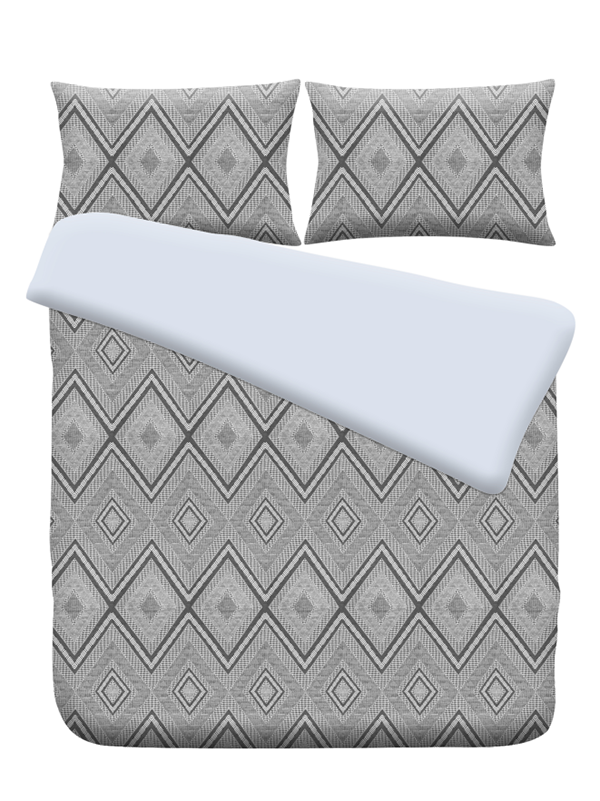 Black and White Diamond Waffle Polyester Bedding FabricA 100% polyester waffle weave with a classic black-and-white diamond grid, balancing softness and breathability. OEKO-TEX certified, it resists fading and shrinking, making it durable for everyday use.View Product →
Blends exist to engineer a balance. Cotton contributes absorbency, comfort, and a matte, natural look. Polyester contributes tensile strength, wrinkle resistance, structural stability, and lower cost. In bedding, common ratios such as 50/50 or 60/40 polyester-cotton appear frequently in hospitality and institutional programs where consistent durability and easy care matter more than a luxury handfeel.
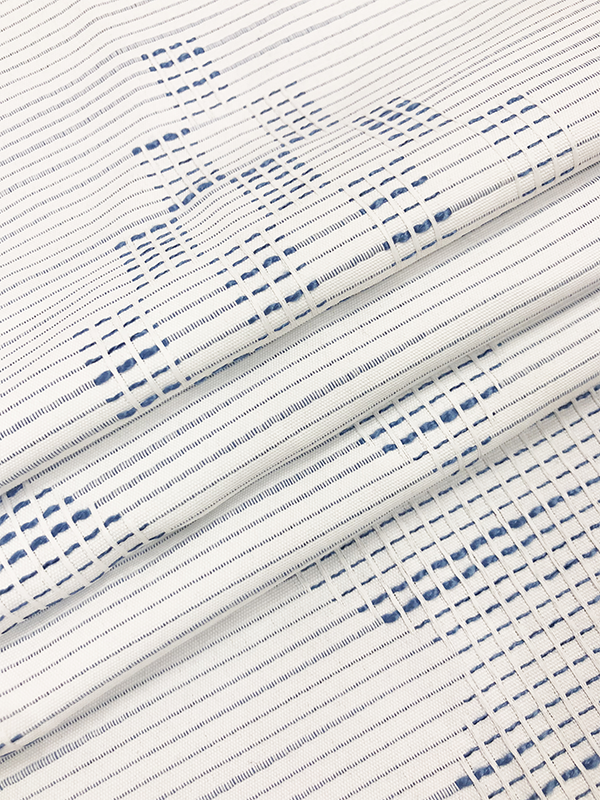
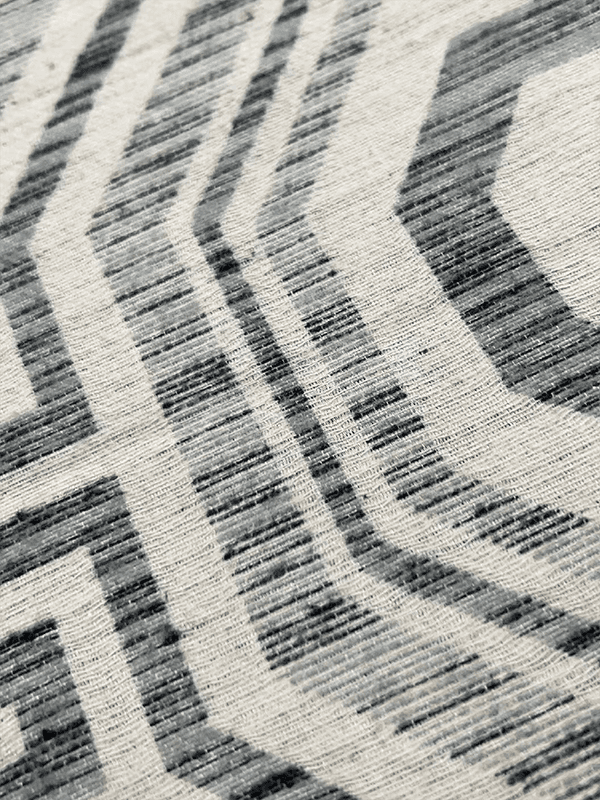
Blends also enable designs that would be difficult to make in a single fiber. Patterns such as coin-shaped openwork, hexagonal interlacing, and structured tufted effects rely on the dimensional support polyester provides while the cotton component keeps the surface approachable.
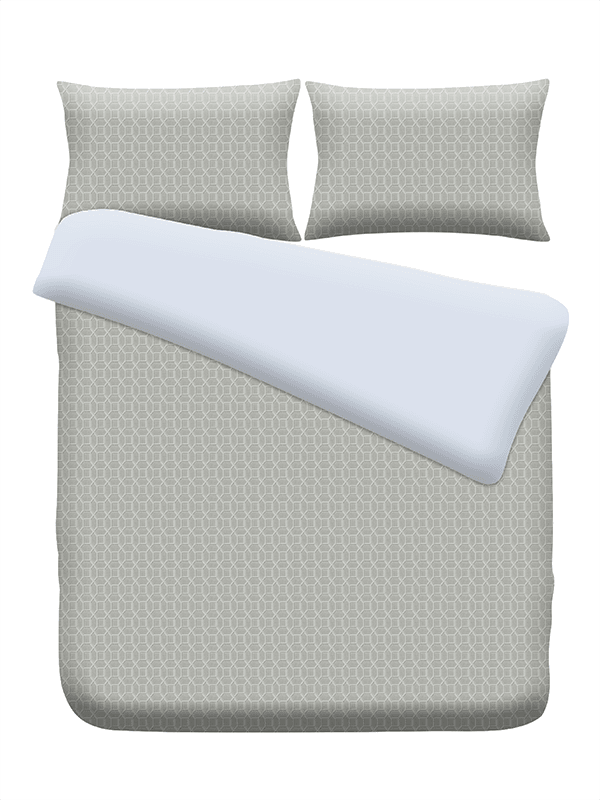 Copper Coin Pattern Polyester Cotton Bedding FabricThis 60% cotton, 40% polyester blend features hexagonal and square motifs forming a copper-coin effect. It offers dimensional stability, wrinkle resistance, and a modern gray-white palette for contemporary bedrooms.View Product →
| Property | 100% Cotton | 100% Polyester | Poly-Cotton Blend |
|---|---|---|---|
| Breathability | High | Moderate | Moderate to high |
| Durability | Good | Very good | Very good |
| Wrinkle resistance | Low to moderate | High | High |
| Ease of care | Moderate | High | High |
| Relative cost | Higher | Lower | Mid-range |
| Typical use | Premium retail bedding | Value and hotel programs | Hospitality and institutional |
Two fabrics with identical fiber content can feel completely different because of weave and density. The weave structure determines how much surface contact the yarns create, how the fabric drapes, and how it wears over time.
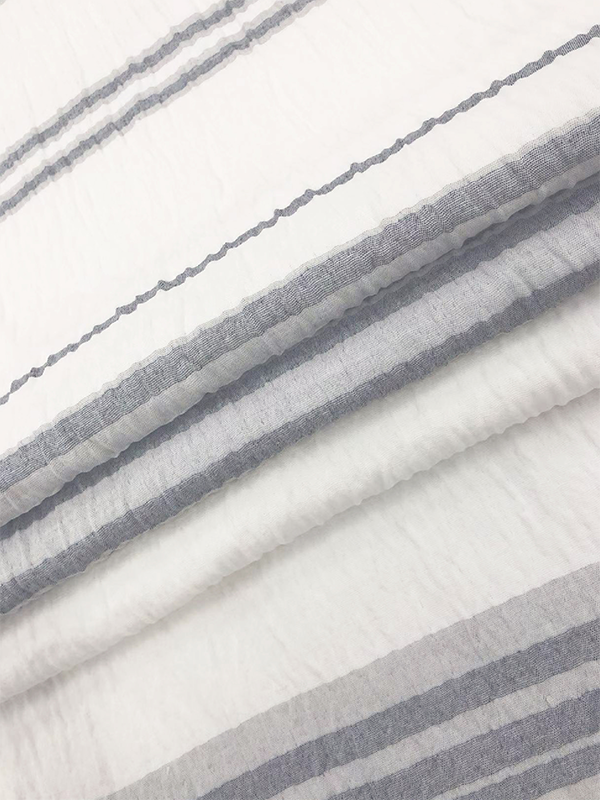
Beyond the base weave, surface constructions change the experience entirely. Waffle weaves give a breathable, massaging texture. Crepe and wrinkled finishes create a relaxed, casual drape. Chenille yarns add a soft, plush handfeel common in blanket-weight bedding. The right construction depends on the end product: a sheet, a duvet cover, a throw, or a decorative pillow.
Buyers often focus on thread count, but thread count tells only part of the story. What matters is how the yarn, weave, and finish perform together after repeated use. If you source bedding fabric for resale or manufacturing, verify these points before committing to a large order.
Pilling happens when loose fibers tangle into small balls on the surface. It is common in low-grade cotton and in polyester fabrics with loosely twisted yarns. Anti-pilling polyester yarns and compact-spun cotton yarns reduce the problem significantly. A standard abrasion or pilling test on a physical sample is the only reliable way to confirm the fabric's behavior.
Cotton fabrics are prone to shrinkage, especially in the first wash. Pre-shrunk fabrics hold their dimensions, and adding polyester to the blend improves dimensional stability. For bedding, which is washed frequently, an unverified shrinkage rate can turn a well-made duvet cover into a poorly fitting one after a season.
Cotton absorbs sweat and feels breathable but can stay damp. Polyester wicks moisture and dries faster but may feel less absorbent. In practice, most sleepers tolerate either as long as the weave allows airflow. We explained how fiber composition changes breathability and durability in more detail in our article on how composition affects bedding fabric performance.
Print and dye quality matter for bedding, since it will be washed and exposed to light repeatedly. Reactive prints on cotton hold color better than pigment prints, and polyester, when properly dyed, has excellent colorfastness. Finishing treatments such as silicone softeners can improve the handfeel of polyester fabrics, but they should not be used as a substitute for good yarn and weave quality.
The most reliable way to evaluate bedding fabric is to test physical samples under your own production conditions. No specification sheet can replace the feel of the fabric, its drape on a filled duvet, or its behavior after a few washes. When you work with a factory, that sample-first approach is standard practice.
As a fabric factory manufacturer, we control the production chain from fiber to finished fabric. That matters for three practical reasons: cost, consistency, and customization. A factory with in-house looms and finishing equipment can price fabric more competitively than a trading company, because there are no intermediate margins. It can also keep quality consistent across batches, which is critical when you order the same fabric in multiple colors or across seasons.
Customization is where a factory relationship pays off most. If you need a specific pattern, a particular handfeel, or a woven design matched to your brand, the supplier's development team becomes part of your product team. We run an in-house design program that introduces new patterns monthly, and we regularly develop exclusive designs from customer drawings or samples. For a private-label bedding program, that means your fabric can be genuinely differentiated rather than drawn from a mill's standard catalog.
Before placing a production order, clarify the points that affect your schedule and budget:
Choose the fiber first, because it defines the ceiling for comfort, durability, and care. Then choose the weave and construction that delivers the handfeel your product needs. Verify pilling, shrinkage, and colorfastness on physical samples before scaling. Finally, work with a supplier whose production control and development capacity match your product ambitions.
Bedding fabric does not have to be a compromise between price and quality. When each decision — fiber, yarn, weave, and finish — is made deliberately, a well-priced fabric can still perform reliably and feel comfortable in real use. That is the standard to ask for, whether you are sourcing for a boutique bedding line or a national retail program.
Your email address will not be published. Required fields are marked *
 Phone: +86-13362131543
 E-mail: [email protected]
E-mail: [email protected]
 Address: No 3 Zhongyuan RD.,Shenshi Lianmeng Industrial Zone,Xucun Town,Haining,Zhejiang,China
Copyright © Zhejiang OSD Textile Co., Ltd. All Rights Reserved.
