English
 中文简体
中文简体 Español
 عربى
عربى
Content
- 1 Why Curtain Fabric Choice Matters More Than You Think
- 2 Common Types of Curtain Fabric and Their Characteristics
- 3 Key Properties to Evaluate When Selecting Curtain Fabric
- 4 Matching Curtain Fabric to Room Type and Function
- 5 The Role of Lining in Curtain Fabric Performance
- 6 Practical Tips for Buying and Caring for Curtain Fabric
- 7 Curtain Fabric Trends in Contemporary Interior Design
Why Curtain Fabric Choice Matters More Than You Think
Curtain fabric is one of the most impactful decisions in any interior design project, yet it is often chosen based purely on visual appeal without considering the practical performance the fabric needs to deliver. The fabric you select determines how much light enters a room, how much privacy is maintained, how well the curtains hang and drape, how easy they are to maintain, and how long they will last before fading, sagging, or deteriorating. A curtain that looks beautiful in a showroom may perform poorly in a south-facing room with intense daily sun exposure, or may prove impossible to clean in a kitchen environment. Understanding curtain fabric from a practical standpoint — not just an aesthetic one — leads to better purchasing decisions and longer-lasting results.
Common Types of Curtain Fabric and Their Characteristics
The curtain fabric market offers a wide range of materials, each with distinct visual qualities, structural properties, and functional characteristics. Knowing the differences between fabric types allows buyers to match the material to the specific demands of the space.
Natural Fiber Curtain Fabrics
- Cotton: A versatile and widely used curtain fabric, cotton offers a clean, crisp appearance and is available in a broad range of weights, weaves, and prints. It drapes well in medium to heavy weights, accepts dye evenly for rich color results, and is relatively easy to wash. However, cotton is prone to fading under prolonged UV exposure and may shrink if not pre-washed or professionally laundered.
- Linen: Linen curtain fabric has a natural, textured appearance with a slightly irregular weave that gives it an organic, relaxed aesthetic. It is heavier than cotton, hangs beautifully, and allows diffused natural light to filter through when used unlined. Linen wrinkles easily and can be more difficult to launder, but its breathability and timeless look make it a popular choice for living rooms and bedrooms.
- Silk: Silk curtain fabric has an unmatched lustrous sheen and fluid drape that creates an impression of luxury and elegance. It is most suited to formal spaces such as dining rooms, master bedrooms, or reception areas. Silk is, however, highly sensitive to sunlight — UV exposure degrades silk fibers rapidly, causing splitting and color loss. For this reason, silk curtains typically require lining and should be kept away from intense direct sunlight.
- Wool: Wool curtain fabrics are heavy, insulating, and excellent at blocking both light and sound. They are particularly well suited to cold climates where thermal performance is a priority. Wool has natural fire-resistant properties, which can be an advantage in certain settings. The trade-off is higher cost, weight, and the need for professional dry cleaning in most cases.
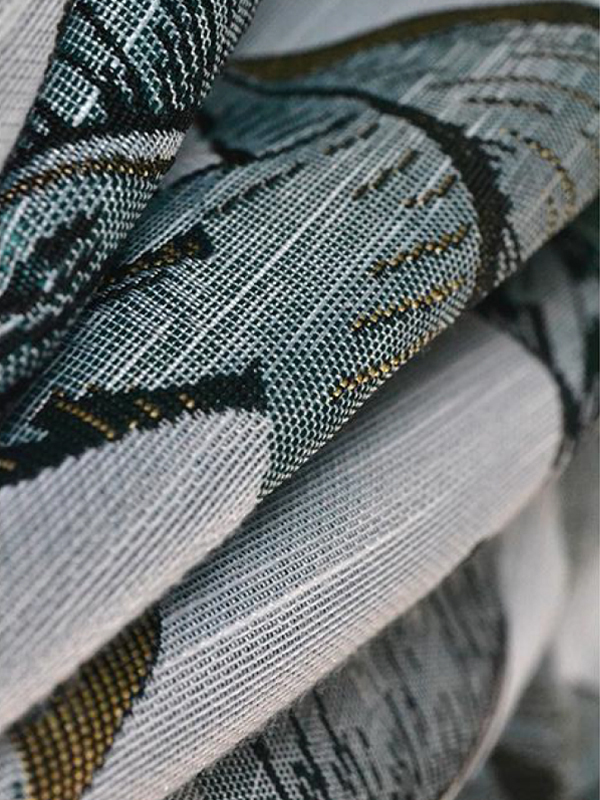
Synthetic and Blended Curtain Fabrics
- Polyester: Polyester curtain fabric is among the most widely used synthetic options due to its affordability, durability, wrinkle resistance, and excellent colorfastness. It does not fade as readily as natural fibers under UV exposure, making it a practical choice for rooms with significant sunlight. Polyester can mimic the appearance of more expensive fabrics such as silk or linen while offering far greater ease of care — most polyester curtains are machine washable.
- Velvet: Velvet curtain fabric — whether made from cotton, polyester, or blended fibers — has a dense, pile construction that gives it exceptional light-blocking and sound-absorbing qualities. Its rich texture and deep color capacity make it a popular choice for home theaters, bedrooms, and formal living spaces. Velvet is heavier than most curtain fabrics and requires careful handling and dry cleaning to maintain its pile structure.
- Sheer Fabrics (Voile and Organza): Sheer curtain fabrics are lightweight, semi-transparent materials used primarily to filter natural light and add a layer of softness to a window treatment without blocking the view or light entirely. Voile is a soft, flowing fabric commonly made from polyester or cotton blends, while organza has a crisper, more structured hand. Both are frequently used as inner layers beneath heavier drapes.
- Blackout Fabric: Blackout curtain fabric is engineered with a tightly woven or coated construction that blocks nearly all incoming light. It is available in a range of outer fabric appearances — including faux suede, textured weaves, and printed designs — with a foam or acrylic backing applied to the reverse side to achieve light-blocking performance. Blackout curtains are essential for bedrooms, nurseries, media rooms, and shift workers' sleeping quarters.
Key Properties to Evaluate When Selecting Curtain Fabric
Beyond fabric type, several performance properties should be evaluated against the specific requirements of the room and window where the curtains will be installed. These properties determine how the fabric performs in real conditions over time.
| Property | Why It Matters | Best Fabric Options |
| Light Control | Determines room brightness and privacy level | Blackout fabric, velvet, lined linen |
| UV Resistance | Prevents fading in sunny rooms | Polyester, solution-dyed acrylic |
| Drape and Weight | Affects how fabric hangs and folds | Silk, velvet, heavy linen, wool |
| Washability | Ease of maintenance over the curtain's lifespan | Polyester, cotton blends, voile |
| Thermal Insulation | Reduces heat loss and cold drafts | Wool, blackout-backed fabrics, velvet |
| Sound Absorption | Reduces noise transmission between spaces | Velvet, heavy wool, thick lined cotton |
| Moisture Resistance | Critical in kitchens and bathrooms | Polyester, synthetic blends |
Matching Curtain Fabric to Room Type and Function
Different rooms in a home or commercial space have different functional requirements for curtains, and selecting the right fabric type for each setting prevents both performance failures and premature fabric deterioration.
Bedroom
Bedrooms benefit most from curtain fabrics that offer strong light control, thermal insulation, and sound dampening to support restful sleep. Blackout-backed fabrics, velvet, and lined linen are all strong performers in this setting. If the bedroom receives intense morning sunlight, blackout fabric with a high-quality foam or triple-weave coating is the most practical choice. For a softer aesthetic without full blackout performance, a lined cotton or lined linen curtain in a medium to heavy weight will reduce light significantly while maintaining a more relaxed visual character.
Living Room
Living room curtain fabric selection is often driven by a balance between aesthetics and light management. Many living rooms benefit from a layered approach — sheer voile panels as an inner layer to maintain privacy while allowing diffused daylight, combined with heavier drapes in linen, velvet, or a cotton-polyester blend for evening privacy and decorative impact. In rooms with significant natural light, polyester or cotton-polyester blends with good UV resistance will maintain their color better than pure natural fibers over time.
Kitchen and Bathroom
Kitchens and bathrooms expose curtain fabrics to steam, cooking fumes, moisture, and frequent cleaning requirements. Polyester and synthetic blends are by far the most practical choice in these environments. They resist moisture absorption, dry quickly, are machine washable, and do not degrade rapidly when exposed to humidity. Natural fibers such as linen or cotton can be used in kitchens if they are treated with a water-resistant finish and laundered regularly, but they require considerably more maintenance to remain in good condition.
Home Office and Study
In a home office, curtain fabric should support glare control on screens while maintaining a professional, clean aesthetic. Semi-sheer fabrics or light-filtering linen panels work well in this setting, diffusing bright sunlight without plunging the room into darkness. For video call backgrounds, a neutral, textured curtain in a medium-weight linen or cotton fabric adds visual interest without distracting from the foreground subject.
The Role of Lining in Curtain Fabric Performance
Lining is one of the most impactful upgrades available for any curtain fabric, and its benefits extend well beyond light control. A quality lining protects the face fabric from UV degradation, adds body and weight to improve drape, enhances thermal and acoustic insulation, and extends the working life of the curtain significantly. Even fabrics that perform adequately on their own — such as cotton or linen — deliver substantially better results when lined.
There are three main lining types available. Standard lining — typically a plain woven cotton or polyester sateen — adds body and moderate light reduction. Blackout lining incorporates a foam or acrylic coating that blocks virtually all light, transforming even a lightweight face fabric into an effective light-control curtain. Interlining, a thick layer of wadding or bump cloth inserted between the face fabric and the lining, provides the highest level of thermal insulation and gives curtains the fullest, most luxurious drape.
Practical Tips for Buying and Caring for Curtain Fabric
Purchasing curtain fabric requires attention to several practical details that affect the final result. Always order a fabric sample before committing to a full length purchase, as color rendering on screens and in showroom lighting often differs from the fabric's appearance in the actual room where it will be used. Test the sample against the wall color, flooring, and existing furnishings in natural and artificial light conditions at different times of day.
- Calculate Fabric Width Generously: For a full, gathered appearance, curtain fabric width should typically be 2 to 2.5 times the width of the window or track. Pinch pleat and goblet pleat headings generally require more fullness than eyelet or tab top styles.
- Account for Pattern Repeats: Patterned curtain fabrics require additional yardage to align repeats across panels. Always ask for the vertical pattern repeat measurement and calculate accordingly to avoid mismatched panels.
- Pre-Wash Natural Fabrics: Cotton and linen curtain fabrics can shrink after the first wash. Pre-washing the fabric before cutting and sewing prevents shrinkage from distorting finished curtain length.
- Follow Care Label Instructions: Machine-washable polyester and cotton blend curtains should be washed on a gentle cycle at low temperatures to prevent shrinkage and protect any surface finishes or coatings. Delicate fabrics such as silk or velvet should always be dry cleaned professionally.
- Rotate Curtains in High-Sun Rooms: Even UV-resistant fabrics will eventually show fading in rooms with intense daily sun exposure. Rotating curtain panels periodically ensures more even fading across the fabric surface, extending the visual life of the curtains.
- Steam Rather Than Iron Where Possible: Many curtain fabrics respond better to steaming than flat ironing, particularly velvet, linen, and sheer fabrics. Steaming removes creases without flattening texture or pile, and can be done with the curtains hanging in place.
Curtain Fabric Trends in Contemporary Interior Design
Current trends in curtain fabric reflect a broader shift in interior design toward natural materials, understated textures, and sustainable sourcing. Linen and linen-look fabrics in neutral tones — warm whites, oatmeal, sage green, and dusty terracotta — continue to dominate contemporary living spaces, where the emphasis is on relaxed, tactile interiors rather than highly formal or heavily patterned schemes. Textural interest is achieved through weave structure — slub weaves, bouclé, and open-weave linen blends — rather than printed pattern.
Sustainable and recycled fabric options are gaining significant market traction, with recycled polyester (rPET) curtain fabrics produced from post-consumer plastic bottles now offering comparable performance to virgin polyester at similar price points. Organic cotton and linen certified under GOTS (Global Organic Textile Standard) or OEKO-TEX Standard 100 are increasingly sought by environmentally conscious consumers. As demand for transparency in supply chains grows, fabric brands that clearly communicate fiber sourcing, manufacturing processes, and environmental certifications are positioned to capture a growing segment of the curtain fabric market.